
Tell Us The Situation
Share the symptoms, the property, and any reports or plans you already have.
Site Drainage Excavation
Excavation support for drainage improvements shaped around the whole property.
Start With The Situation
Persistent wet areas, surface runoff, and water near structures deserve more than a quick trench. The source, movement, and destination of water must be understood. Drainage work should account for grades, soil, existing systems, and requirements governing where water can be discharged.
Begin with what is known, identify what needs confirmation, and connect the work to a clear plan for your property.
Discuss Site Drainage Excavation
Plan The Details
Walk the property and discuss when the problem occurs, how long water remains, and whether conditions have changed. Downspouts, nearby grades, hard surfaces, and existing drains may all contribute. Some concerns need a drainage designer or other qualified professional before an excavation scope is developed.
Make The Work Understandable
A drainage system needs an appropriate destination. Sending water toward a neighbor, public walkway, or unapproved connection can create new problems. Confirm the design, discharge approvals, and responsibilities before work begins, including any requirements for detention, infiltration, or connection to an existing system.
Permits, utility coordination, and applicable requirements should be confirmed for the specific location and scope.
Consider The Options
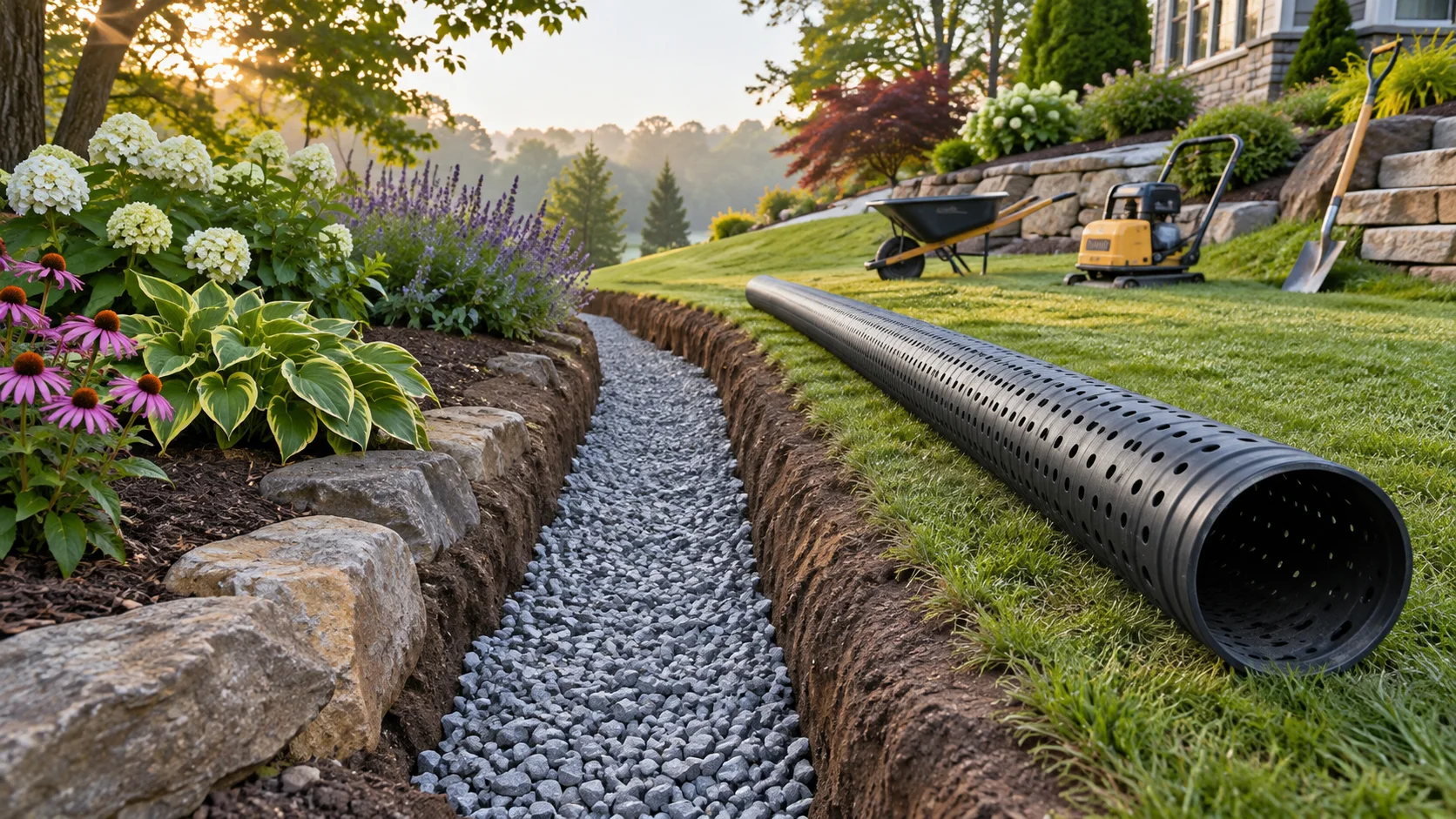
Excavation may support a swale, underground drainage line, catch basin, or another approved approach. The appropriate combination depends on site conditions. Consider how the improvement will be maintained and accessed rather than assuming that buried components will never need attention.
Prepare With Purpose
Finish grading and surface restoration influence how a drainage project performs. Discuss the desired lawn or landscape finish, expected settlement, maintenance, and how to observe the system after rainfall. A clear closeout conversation helps you understand what normal operation should look like.
Keep the working area clear and follow the project team’s access guidance. Never enter an excavation or move barriers to inspect the work yourself.
Plan The Next StepFrom First Call To Handoff
Share the symptoms, the property, and any reports or plans you already have.
Review the route, utilities, access, and details that shape the work.
Understand the approach, responsibilities, timing, and restoration plan.
Coordinate the work, checks, and handoff around the agreed scope.
Before We Begin
Not necessarily. Multiple sources, soil limitations, or outlet constraints may require a broader plan. A site assessment should explain the expected benefit and remaining limitations.
Share the property type, any inspection reports or drawings, access concerns, and what prompted the project. Photos can help provide context, but they do not replace an on-site assessment.
Timing depends on the defined scope, utility coordination, permits, inspections, weather, and site access. Confirm the planned sequence and communication process before work begins.
Connected Work
From A Question To A Plan
Tell us about your property and the work you have in mind.