
Tell Us The Situation
Share the symptoms, the property, and any reports or plans you already have.
Water Line Replacement
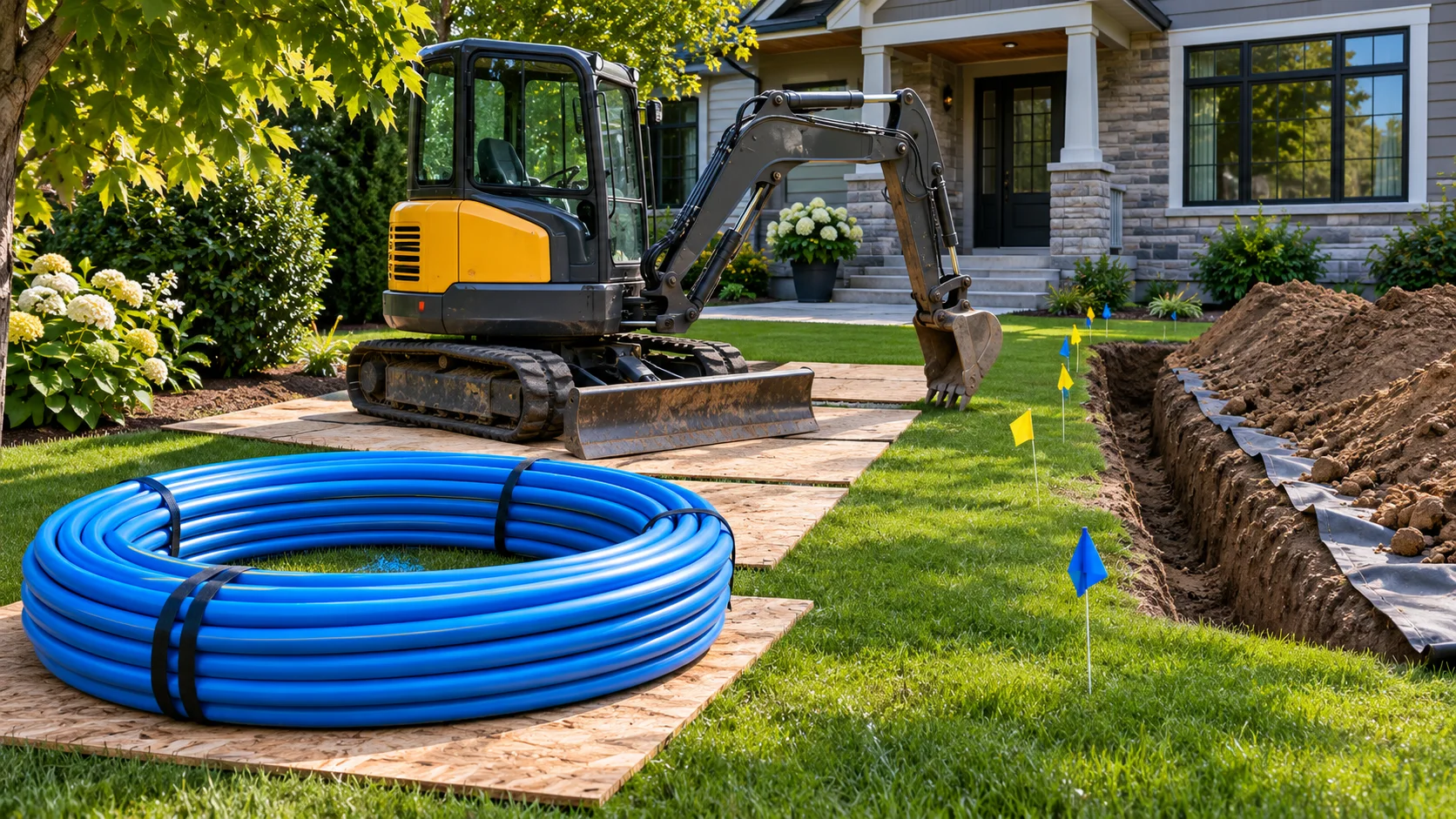
Plan a water-service replacement around pipe condition, property access, and the connection to the supply.
Start With The Situation
Leaks, corrosion, pressure concerns, and older service materials may prompt a review of the water line. Those symptoms can also have other causes. Start by confirming the affected section and the responsibilities of the property owner and utility before deciding what work is required.
Begin with what is known, identify what needs confirmation, and connect the work to a clear plan for your property.
Discuss Water Line Replacement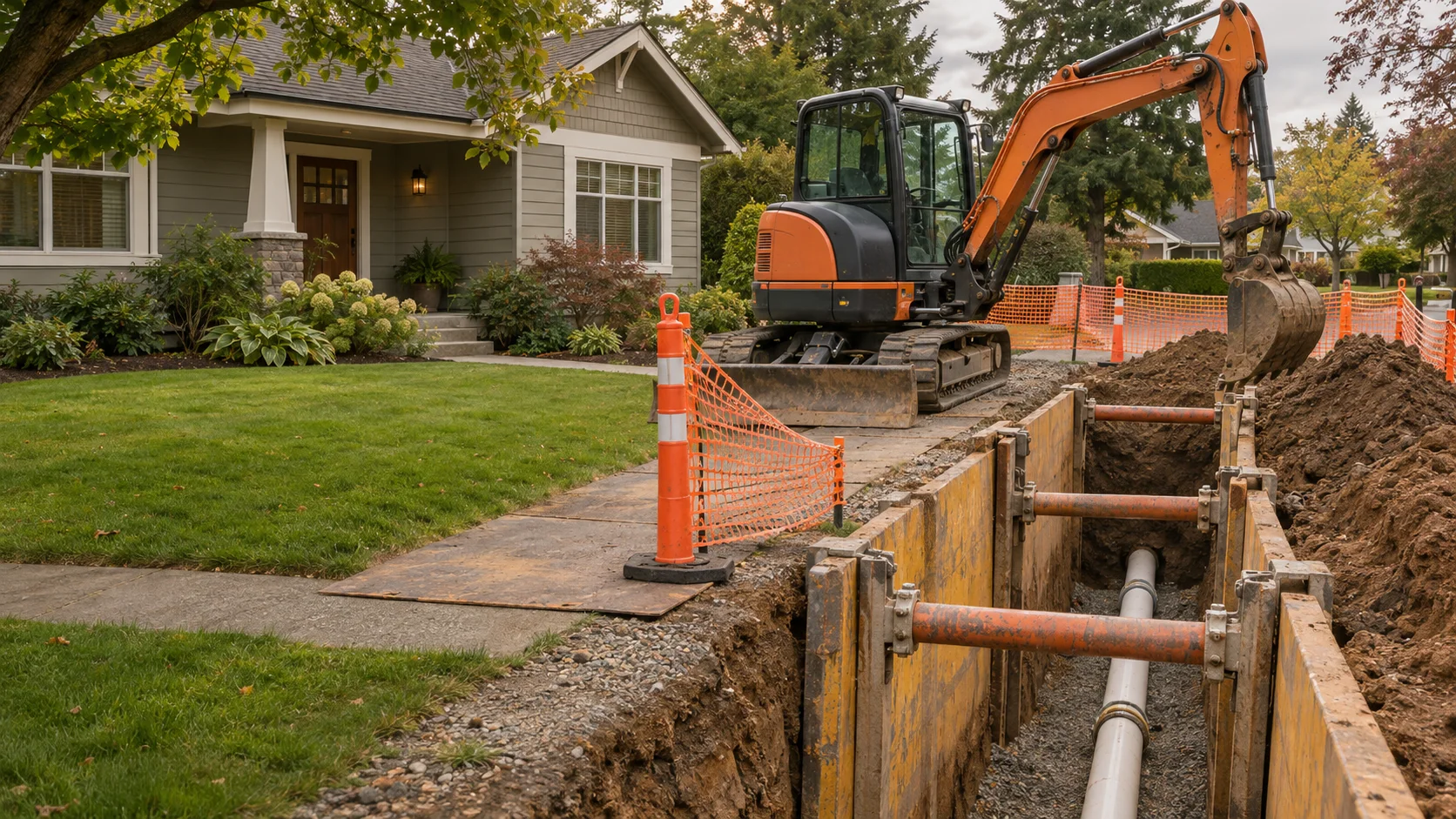
Plan The Details
Water-service work requires attention to the approved connection, burial requirements, separation from other utilities, and the point where the line enters the building. Existing landscaping and hard surfaces may influence access. The installation method should be selected after these conditions are understood, not solely because one method sounds less disruptive.
Make The Work Understandable
Confirm which party handles the meter, public connection, interior transition, permits, and any required testing or disinfection. Pipe material and sizing should follow applicable requirements and the property’s needs. A clear scope also addresses shutoff coordination and the finish work needed after the new service is installed.
Permits, utility coordination, and applicable requirements should be confirmed for the specific location and scope.
Consider The Options
An excavation route may be the right approach when access, depth, or connections require it. In suitable conditions, a trenchless method can reduce some surface disturbance. Neither approach removes the need to locate utilities, verify the route, and plan for the entry and exit work.

Prepare With Purpose
Water-service replacement usually involves an interruption. Discuss the planned window, access needed inside the property, and any business or household needs that should be considered. The return to service may depend on inspections, testing, or utility coordination; do not assume water will be available at a specific time until the plan is confirmed.
Keep the working area clear and follow the project team’s access guidance. Never enter an excavation or move barriers to inspect the work yourself.
Plan The Next StepFrom First Call To Handoff
Share the symptoms, the property, and any reports or plans you already have.
Review the route, utilities, access, and details that shape the work.
Understand the approach, responsibilities, timing, and restoration plan.
Coordinate the work, checks, and handoff around the agreed scope.
Before We Begin
It can be one possibility, but fixtures, valves, supply conditions, or other restrictions may be responsible. Diagnosis should come before a replacement recommendation.
Share the property type, any inspection reports or drawings, access concerns, and what prompted the project. Photos can help provide context, but they do not replace an on-site assessment.
Timing depends on the defined scope, utility coordination, permits, inspections, weather, and site access. Confirm the planned sequence and communication process before work begins.
Connected Work
From A Question To A Plan
Tell us about your property and the work you have in mind.